Isiqalo sobulumko: The Life and Work of Bennett Beste Mdledle
Almost two years ago, TCC Press announced Isiqalo sobulumko: The Life and Work of Bennett Beste Mdledle as a forthcoming title. Since then, there have been a few delays in the publishing process - from technical matters like permissions to expanding the contents! Now, finally, the book is in press and will be available for purchase from November 2026.

In a recent blog post for the bua-lit language and literacy collective, TCC director and editor of Isiqalo sobulumko Chris Thurman writes:
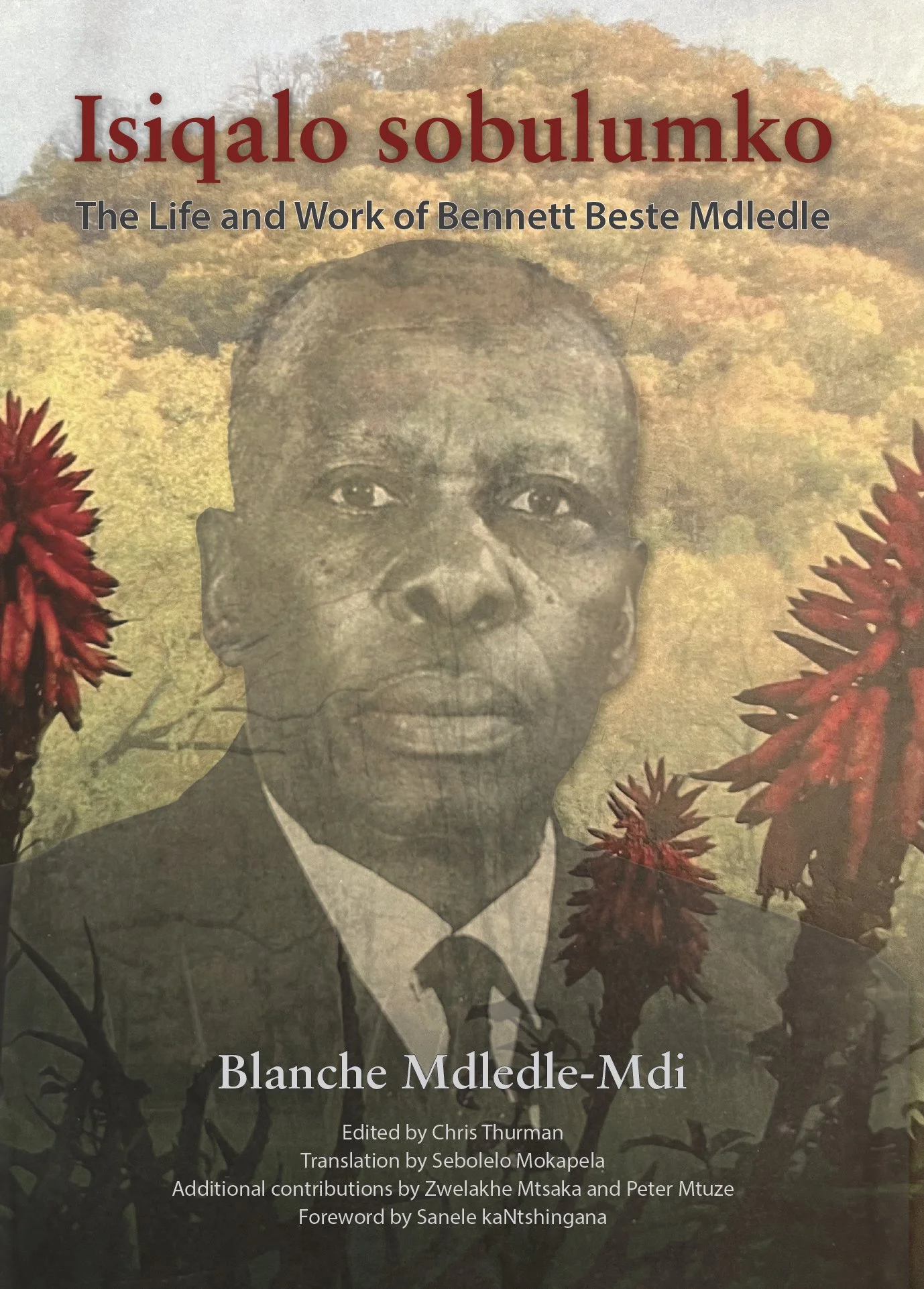
Bennett Beste Mdledle (1899-1970) was a figure of some stature in the Eastern Cape over the course of his long career in public life. This extended beyond his years teaching at Lovedale College – from the 1920s to the 1950s – into a stint in the government of the former Transkei.
His name is associated with numerous publications (including translations of three of Shakespeare’s plays into isiXhosa) and it remains prominent in places like Cala and Askeaton, where a school bears his name. He has recently been brought to the attention of audiences watching John Kani’s play Kunene and the King, which recalls Kani’s experience of falling in love with Mdledle’s translation of Julius Caesar when he was a schoolboy.
Nevertheless, B.B. Mdledle could easily become forgotten.
A few years ago Blanche Mdledle-Mdi, the daughter of “uB.B.”, approached me with a proposal to produce an English version of her isiXhosa biographical sketch of her father, which had been self-published under the title Umyezo wohluka kweminye ngeziqhamo zawo oku (One garden differs from another by its fruit). This presented an opportunity to create a larger volume as part of the Tsikinya-Chaka Centre’s “Lives of the Translators” research project.
Thurman adds that the book’s title “resonates with the biblical echoes of Blanche Mdledle-Mdi’s original text”, and is borrowed from one of her epigraphs, which quotes Psalm 111: “Isiqalo sobulumko kukoyika uYehova” (“The beginning of wisdom is the fear of the Lord”). “We wanted to explore various ‘sources’ to gain wisdom and insight into B.B. Mdledle’s life and times,” he explains.
The post continues:
Mdledle was much more than a Shakespeare translator, of course, as the book bears out. Yet that aspect of his career – his uJulius Caesar (1956), uMacbeth (1959) and uBusuku beShum’ elinaMbini (Twelfth Night, 1960) are the first and currently the only full translations of Shakespeare into isiXhosa – intersects with, and reveals much about, his roles as an educator, community leader and politician.
In turn, if we want to appreciate these texts in their historical context, a more detailed understanding of institutions such as Lovedale as well as of cultural, family and political dynamics is required. The book thus incorporates various literary genres, registers and voices, ranging from the personal tribute of a daughter to academic essays on Mdledle’s work as a translator.
The project received a great boost when Sebolelo Mokapela of the University of the Western Cape (a bua-lit affiliate) agreed to translate Blanche Mdledle-Mdi’s isiXhosa text into English. Sanele kaNtshingana of the University of Cape Town – who was part of the team tasked with translating sections of Othello into isiXhosa for the multilingual Baxter Theatre production of that play in 2024 – played a vital role in the further development of the book through his work as editor and language adviser.
Thurman also provides details about the inclusion of previously published material on Mdledle by Peter Mtuze (who wrote the first scholarly account of Mdledle as Shakespeare translator) and Zwelakhe Mtsaka (who recently completed his doctoral research on Mdledle’s translations, exploring their historical, political and cultural contexts).
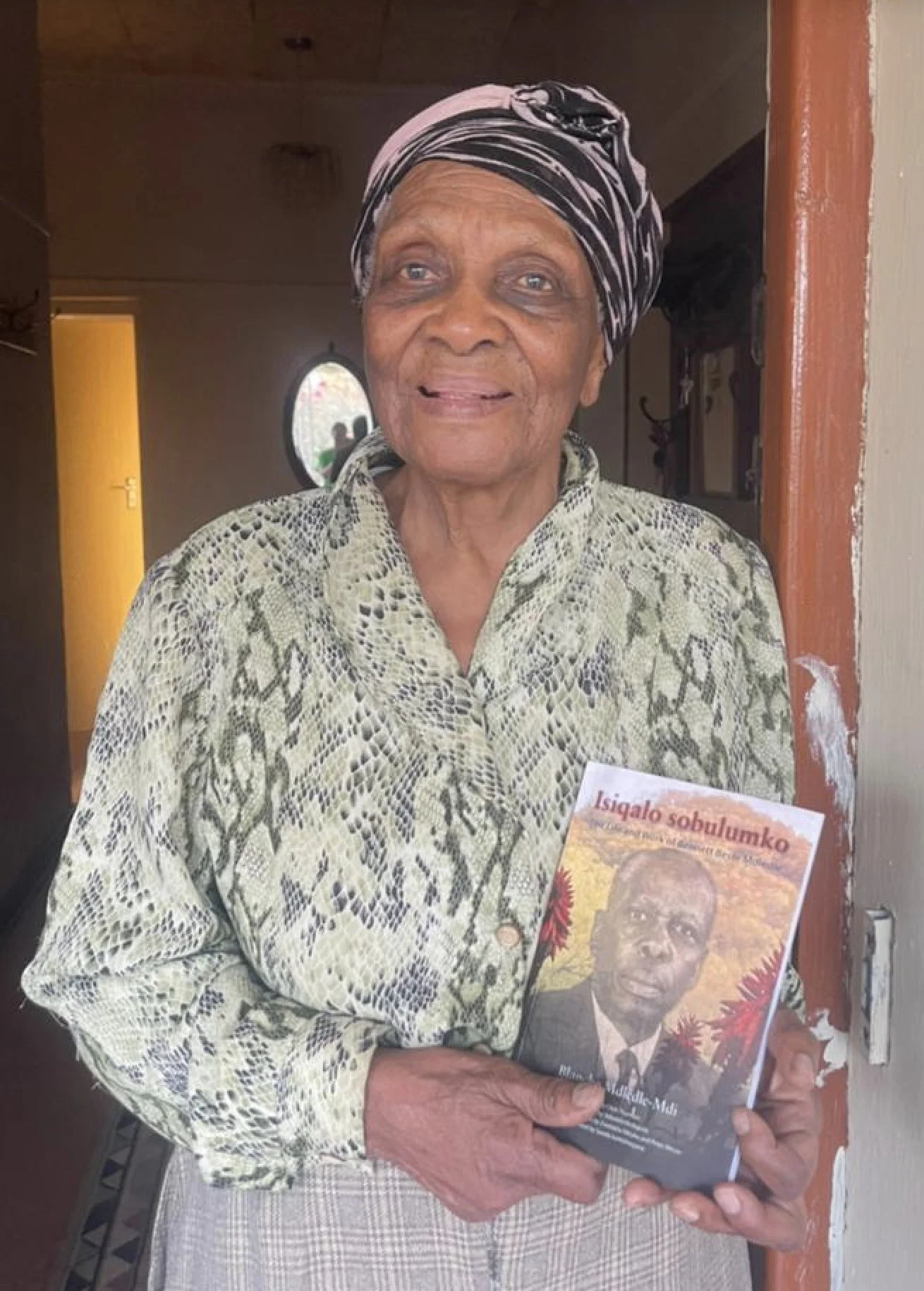
Blanche Mdledle-Mdi with a proof copy of Isiqalo sobulumko